There’s so much happening in the labour market right now that “wait and see” is no longer an option. From demographic shifts to accelerating skill changes, and the rise of AI, the rules of the labour market are being rewritten — and so must the strategies governments, educators, and employers use to be future-ready.
At Lightcast, we’ve been helping organisations navigate labour market change for more than 20 years. In just the past year, we published research on the Rising Storm of labour shortages driven by demographic decline, showed how the pace of skill change within occupations is accelerating, and uncovered the AI skills employers actually need.
Taken together, this research points to an urgent need for action: building workforces and industries that are future-ready. Around the world, this goal is increasingly at the heart of government strategies. The language varies, but the direction is the same: investing in sectors that will drive long-term growth and competitiveness.
The UK government’s new Industrial Strategy, for example, sets out plans to leverage the country’s strengths over the next decade by investing in eight high-growth sectors, including digital, clean energy, life sciences, and defence. At the end of 2024, the European Commission tasked former ECB President Mario Draghi with outlining what Europe needs to secure its competitiveness. His report highlighted challenges but also called for targeted investment in growth sectors such as defence, green, and technology.
Beyond Europe, the Australian government launched Future Made in Australia — a policy framework to tackle structural and strategic challenges through major investments in security, green infrastructure, and digital technologies. And in the US, the new administration is also focused on growth through strategic industries, including manufacturing and defence.
Different names, different emphases — but the same core ambition: future-proofing economies.
And that starts with data. Governments, educators, and employers that are future-ready act now. They use deep labour market insight to guide investment, adapt curricula, and stay ahead of competition.
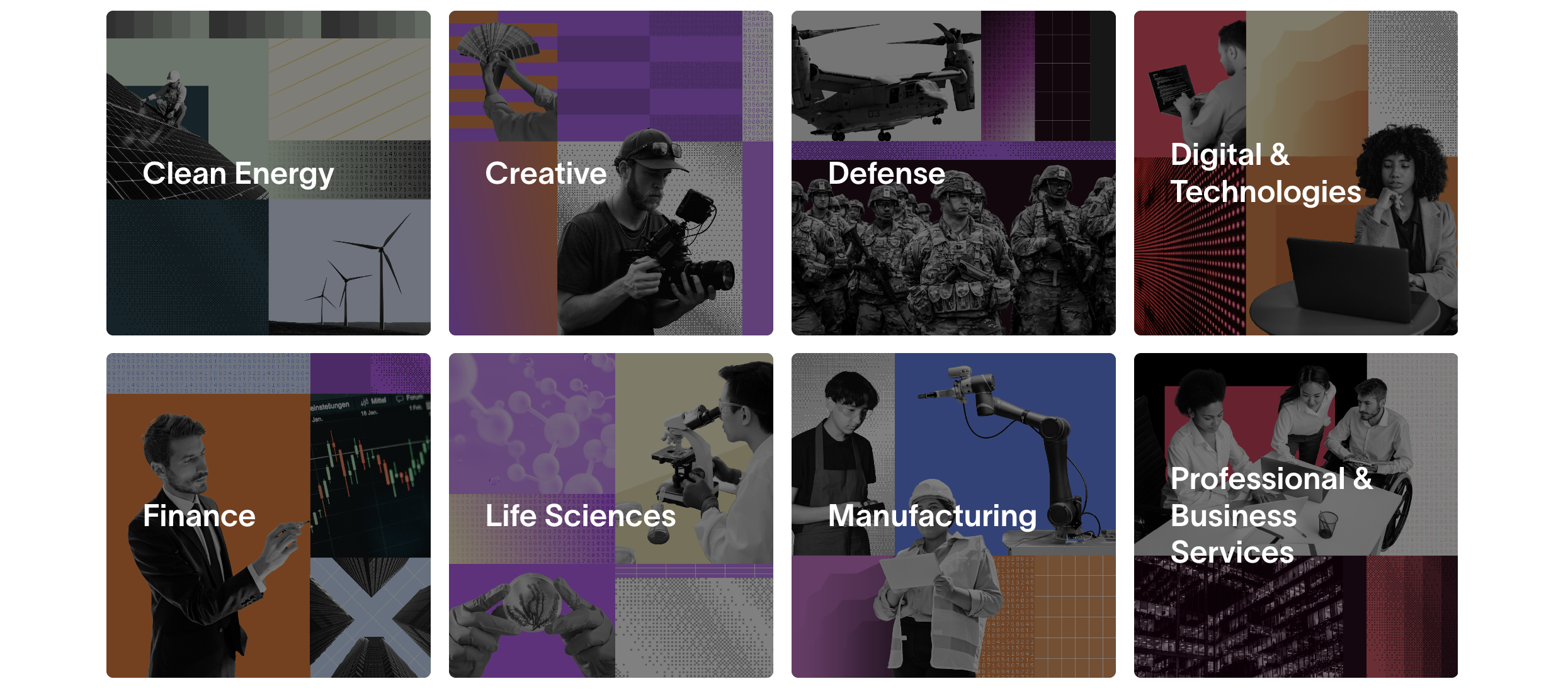
That’s why we’ve created >> Future Ready Industries << — a new tool to show how data can highlight investment opportunities, reveal the skills that will be needed, and identify the key players to build industries ready for the future. Click on the image below to access a wealth of insights on eight key sectors across ten advanced economies.