When a relatively young institution plans its next phase of growth, the stakes are high. Each new academic program must advance the mission while remaining financially viable, defensible to accreditors, and sustainable over time. For a private medical college operating without public funding, those decisions carry even more weight.
That’s the position Idaho College of Osteopathic Medicine (ICOM) found itself in as it prepared to expand beyond its flagship Doctor of Osteopathic Medicine (DO) program.
To guide program strategy and support accreditation, ICOM turned to Lightcast Analyst — a tool that could help them evaluate labor market demand, benchmark peer programs nationwide, and inform internal and external decision-making, all while saving valuable time and effort by bypassing the need to manually track down and collect the necessary data.
Leading that effort was Darren Blagburn, ICOM’s Assistant Vice President for Institutional Effectiveness and Compliance, whom we spoke to for this case study. In his role overseeing institutional planning, accreditation, and compliance, Blagburn was responsible for evaluating potential new programs and ensuring each proposal was data-driven, mission-aligned, and defensible to regulators and the Board.
Download the summary deck, or read on to learn more about how ICOM leverages Lightcast data to power program research, institutional strategy, and accreditation success.
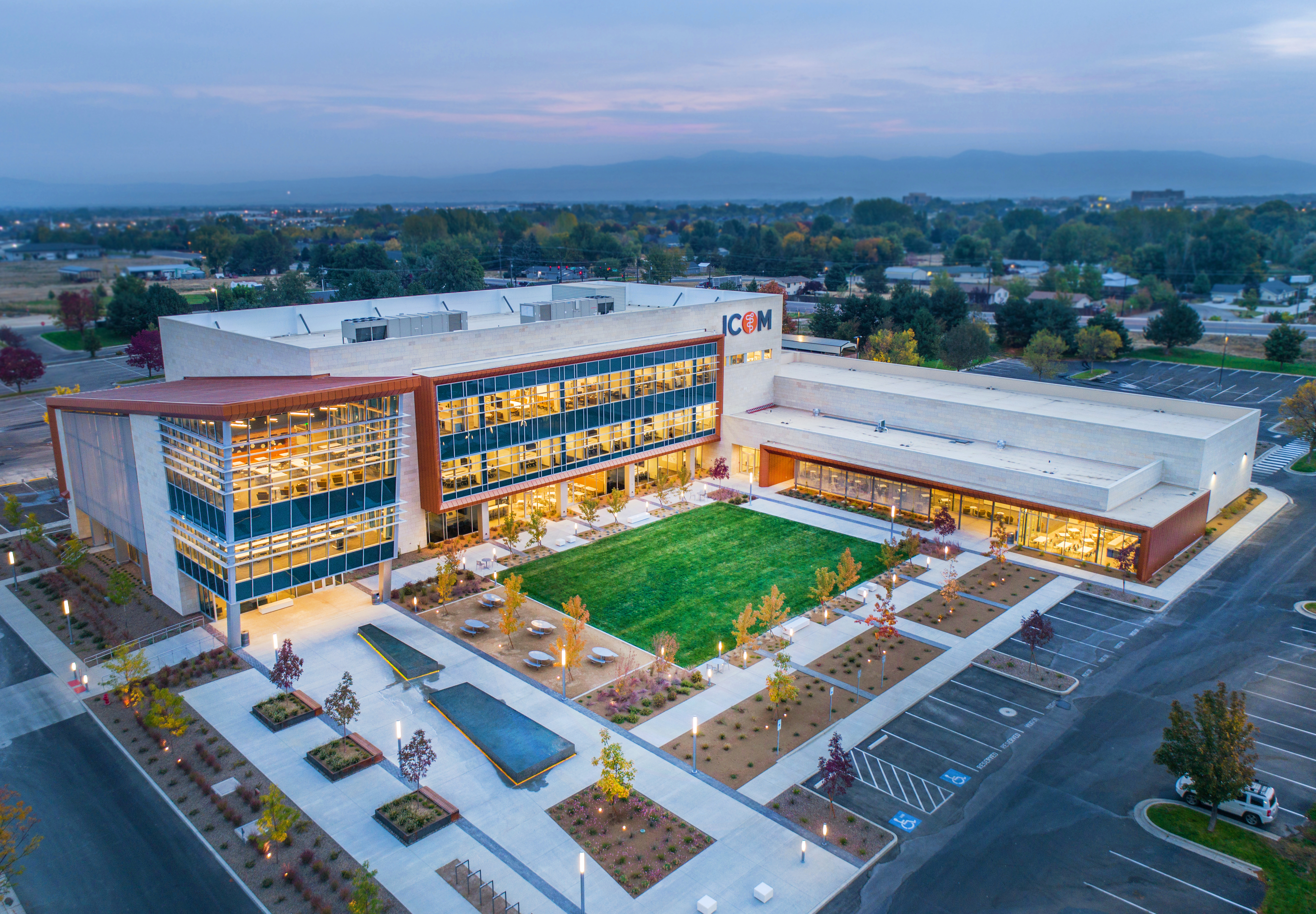
ICOM's Campus in Meridian, ID. PC: Idaho College of Osteopathic Medicine
A Growing Institution at a Strategic Inflection Point
Founded in 2016 and welcoming its first class in 2018, ICOM is still early in its institutional lifecycle. The college achieved full program accreditation in 2022 and is now progressing toward institutional accreditation — a milestone that opens the door to offering additional degrees.
Until now, ICOM has focused exclusively on medical education through its DO program. While headquartered in Idaho, the institution draws applicants nationwide, with students coming from nearly every state.
As the next phase of their long-term strategic planning, leadership began exploring new pathways that could:
Support students who need additional academic preparation before entering the DO program.
Provide alternative degree pathways for students who may not complete the full DO program.
Create new academic offerings aligned with workforce demand and institutional capacity.
Do all this in a way that strengthens student success and long-term career outcomes.
“There’s always been a plan to expand eventually,” Blagburn explained. “We’ve now reached the point where the timing was right.”
But expansion also brings complexity. ICOM initially identified more than 30 possible program concepts that could align with their mission. Narrowing that list down to a manageable number required a thorough, data-driven evaluation process.
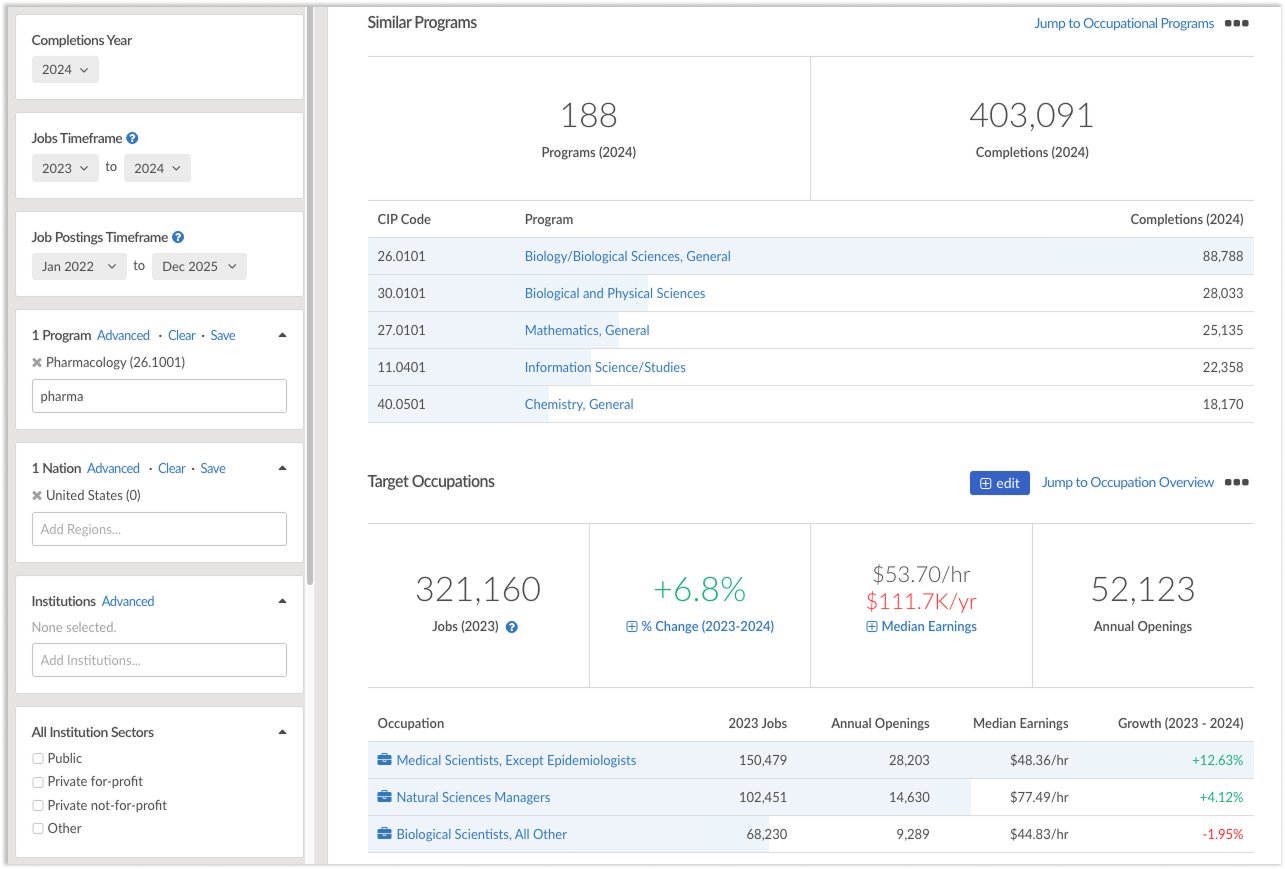 Completions and occupation data from the Program Overview Report in Analyst
Leveraging Lightcast to Streamline Program Research
From prior experience, Blagburn knew how difficult it can be to manually assemble consistent labor market and academic benchmarking data across dozens of institutions and programs.
“If you're going to try to search out all the different data points manually, you have to look at every single university’s website to figure out which programs they offer, how many students have graduated, what are the relevant occupations, etc.” Blagburn pointed out. “I've done it before and it’s almost impossible to get all the information at the level you need to use that data for decision making."
Having used Lightcast tools before at a previous institution, he also knew how much simpler it could be.
“I knew that in order to expand our ability to search out this information, we needed something that's a quick and easy tool to use,” said Blagburn.
With Analyst, Blagburn was able to quickly access standardized data on:
Number of institutions offering similar programs nationwide
Program modality (online vs. in-person) and tuition
Annual graduate volume and completion trends
Projected employment outcomes and hiring demand for each program
Typical wages, top employers, and in-demand skills for relevant occupations
All in one place.
“It’s normally a two-week process to do everything that lightcast does in about 10 minutes,” said Blagburn.
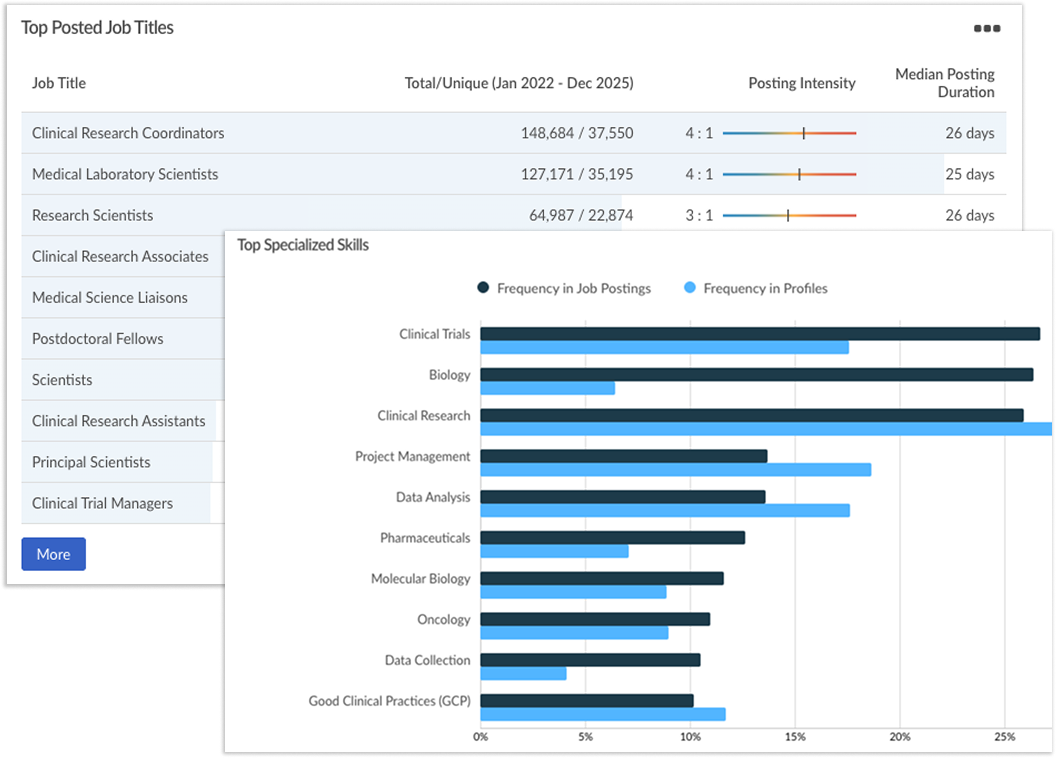
Job postings data from the Program Overview Report in Analyst
Narrowing the Field: From 30 Programs to a Strategic Shortlist
Powered by Analyst, Blagburn worked closely with a faculty partner to analyze and prioritize the initial list of roughly 30 potential programs. Together, they applied a rubric that assessed both quantitative data from Lightcast and qualitative considerations such as mission fit and internal capacity.
“We identified in general what programs we thought would align well with our mission,” Blagburn said. “And we then used Lightcast specifically to drill down into those.”
Programs were color-coded based on how well they met institutional criteria, allowing leadership to quickly see which options rose to the top.
Findings were then presented to an internal task force chaired by Blagburn and including the president, dean, CFO, and senior faculty leaders. From there, the data also informs the recommendations that go to the Board for approval.

Students engage in a simulation exercise at ICOM. PC: Idaho College of Osteopathic Medicine
Enrollment Planning Based on Real Benchmarks
Beyond program selection, Lightcast data is also supporting the next phases of development, including enrollment forecasting and accreditation.
Rather than guessing or assuming aggressive growth, ICOM used national completion averages to set realistic expectations.
“For example, we might see that programs at some institutions have 100 completers annually," Blagburn said. “But if the national average is 40, we may start by aiming closer to that.” From there, ICOM will aim to phase in more students and grow sustainably over time.
Lightcast data is also supporting the business plan for ICOM’s proposed new programs, which in turn supports multiple compliance requirements, including:
Informing institutional accreditation reviews
Ensuring the programs will satisfy gainful employment requirements
Meeting state and federal reporting obligations
“They want to know, are you creating a program that is viable and leads to good jobs?” Blagburn said.
In this way, Lightcast data helps demonstrate ICOM’s responsible stewardship of tuition dollars — a critical consideration for a tuition-funded institution.
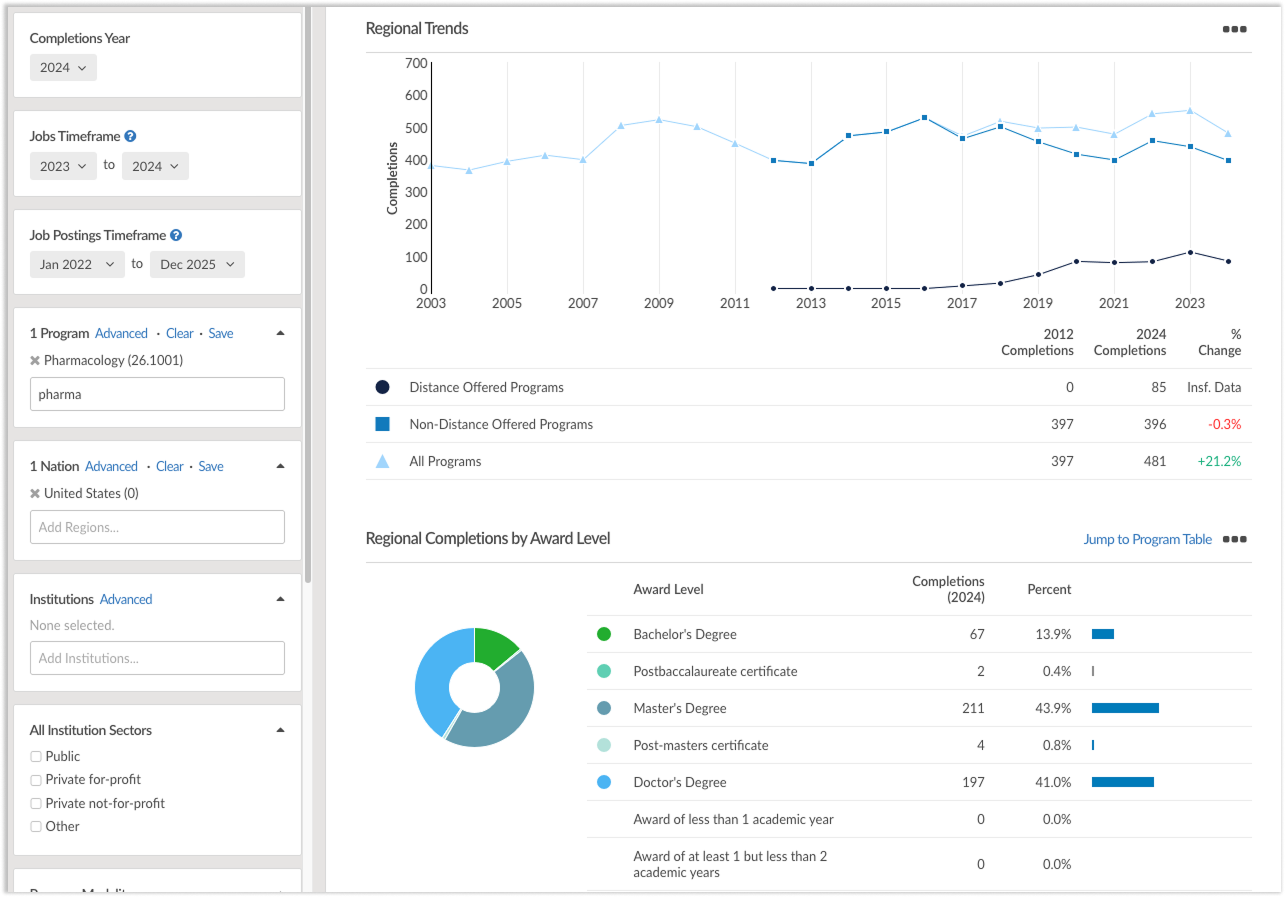
Completion trends from the Program Overview Report in Analyst
The Lightcast Data Difference
When asked to summarize the value of Lightcast Analyst, Blagburn pointed to three core benefits:
Data quality - With over 25 years of experience aggregating and synthesizing data from reliable sources like IPEDS, the BLS, all 50 state labor market information offices and many others, Lightcast provides the best available data for high-stakes decisions.
Data consistency - With Analyst, data from disparate sources is collected, cleaned, and delivered in a single, user-friendly interface with standardized definitions that enable meaningful comparisons.
Time savings - “It took me two weeks to do this kind of research and report building before,” said Blagburn. “Analyst has a lot more data, and lets me do it in minutes as opposed to weeks. I've got lots of other responsibilities besides this one taskforce, so it’s helpful to free up time by using technology like this.”
“I think data quality is always the most important, but the other two are just as important when taken together,” said Blagburn.
The third point, time savings, came from yet another benefit Blagburn called out, which was the user-friendliness of the tool.
“I just type in the program, and the report would pop right up,” he said. “You can learn it very easily as opposed to having to go through two days of tutorials.”
Looking Ahead
Looking ahead, ICOM will continue using labor market data at key moments — especially as new programs move through business planning and accreditation, where they must demonstrate that offerings are viable and lead to strong employment outcomes.
For Blagburn, Analyst makes that work not only faster, but more defensible. With reliable, consistent benchmarks in one place, ICOM can evaluate opportunities with confidence, and keep their focus on the ultimate goal: building pathways that support student success and strengthen long-term career outcomes.
To learn more about global labor merket trends and how AI, labor shortages, and geopolitics are shifting the ground beneath everyone's feet, read our latest research, Fault Lines.